The process of choosing the right Tellure Rota wheel to match the operating conditions can be divided into three steps:
Identifying the correct type of wheel based on the floor and the characteristics of the operating environment;
Calculating the dynamic capacity, static load and smoothness required by the specific application and, therefore, determining the wheel diameter;
Identifying the correct castor and checking the dynamic capacity of the wheel and castor assembly.
A technical analysis of the operating conditions is therefore essential for choosing the right wheel. In particular, the following factors must be carefully considered in the choosing of the wheel:
The nature and condition of the ground and the presence of any obstacles will have an influence on choosing the right wheel. They are also important factors affecting the performance of the moving trolley as well as the efficiency and the duration of the wheels and castors.
The main floor-wheel covering combinations are the following:
Tiles
Elastic rubber or pneumatic
Asphalt
Elastic rubber or pneumatic
Cement-resin
Polyurethane or rubber
Dirt floor
Elastic rubber or pneumatic
Floor with gratings
Elastic rubber or pneumatic
Floor with chips, obstacles or other materials
Elastic rubber or pneumatic
To choose the right wheel, it’s also important to determine if the wheel materials are compatible with the chemical-environmental conditions, the temperature and the humidity in addition to the inductive electrostatic phenomena that may affect wheel operation.
Chemical-environmental conditionsBecause there are so many different types of aggressive chemical agents in work environments, it’s difficult to provide a complete and exhaustive description. The main chemical substances that a wheel may come in contact with include:
chlorinated and aromatic solvents (e.g. acetone, turpentine);
hydrocarbons (e.g. petrol, oil, diesel oil, mineral oils);
alcohol (e.g. ethyl alcohol);
fresh water;
salt water;
saturated steam.
You can download the Tellure Rota table showing the compatibility of the materials used to build Tellure Rôta wheels in different operating environments by clicking here.Temperature
The magnitude of the load is the value (expressed in Kg) obtained by adding the weight to be transported to the trolley weight (tare).
The nature of the load, either a liquid or a solid, has a significant effect on the wheel load capacity calculation.
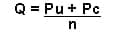
The formula to determine the load capacity for each wheel is:
where:
Q = load capacity for each wheel;
Pu = weight to transport;
Pc = trolley tare (trolley weight);
n = number of wheels in contact with the ground.
Solid load:For a solid load, n=3 for a four-wheeled trolley (where three out of four wheels are considered to be in contact with the ground at all times).Liquid load:For a liquid load n=2 for a four-wheeled trolley (where two out of four wheels are considered to be in contact with the ground at all times).
Trolley speed is an important factor when choosing a wheel.
In fact, if the speed is zero, and thus the use is mainly static, it is enough to compare the load capacity for each wheel with the static load indicated in the manufacturers’ catalogues.
If the speed is other than 0, then the means of traction must be taken into consideration.
Manual moving
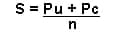
For manual moving, the speed is generally less than or equal to 4 km/h. Choosing a wheel that allows only one operator to move a load should be based on a wheel smoothness value determined by the following formula:
where:
S = smoothness;
Pu = weight to transport;
Pc = trolley tare (trolley weight);
n = number of trolley wheels (maximum 4)
Mechanical moving with towing devicesFor towed mechanical moving, the wheel should be chosen based on the trolley’s operating speed. The wheel rated dynamic load capacity normally refers to a speed of no more than 4 km/h (1.1 m/s). If the speed is higher than 4 km/h, a correction factor must be applied to the load capacity value since the materials forming the wheel undergo chemical-physical changes during which their performances decrease with an increase in operating speed.
You can download the Tellure Rota table showing the indicative percentages of load capacity reduction with an increase in speed for different types of Tellure Rôta wheels by clicking here. On-board mechanical movementFor trolleys with an on-board drive (trolleys with drive wheels – self-propelled trolleys), the wheels are subjected to particular stress and strain. Since many factors have to be evaluated, it is recommended to contact the manufacturer to choose the wheels and castors to apply to self-propelled trolleys.Manoeuvrability
Trolley manoeuvrability refers to the ability of a trolley to be moved more or less easily during use. The combination of swivel castors and fixed castors on a trolley influences significantly its manoeuvrability. Tellure Rôta presents a table showing the most common wheel layouts along with the relative castors.
Tellure Rota – The best in quality and workmanship